Vapi alternatives for Claude Code and Codex: why choose Call4me?
Choose a calling tool around the work your assistant needs to finish, including unexpected questions, personal involvement, and calls after a business opens.
 Nick Khami · · 6 min read
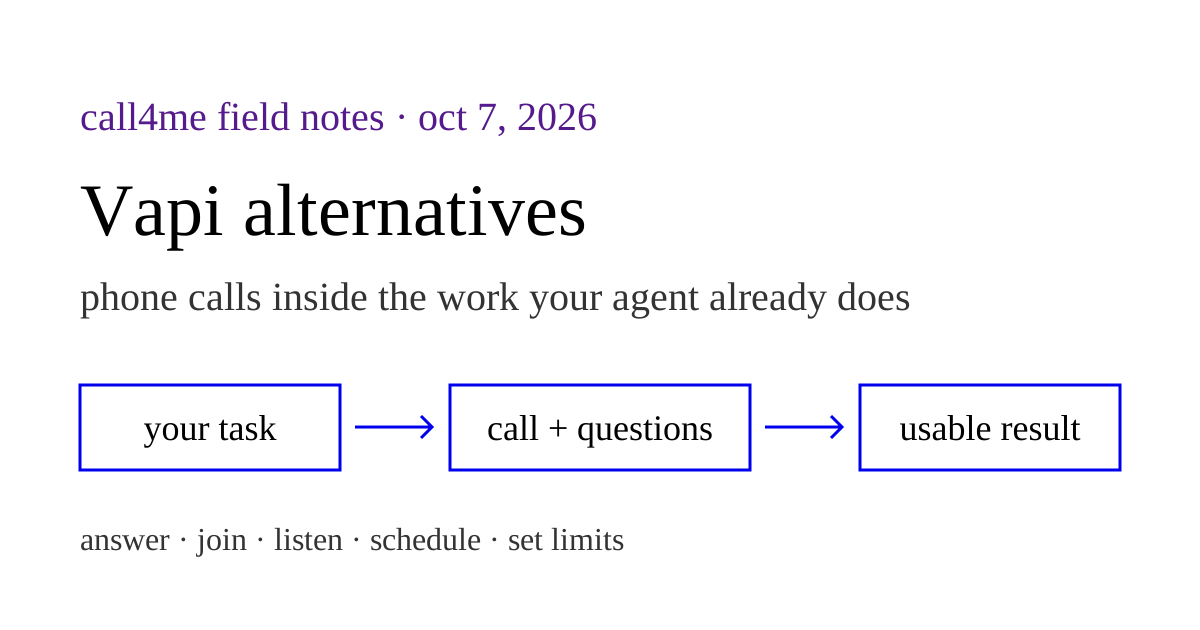
Choose Call4me when phone calls are part of the work you already delegate to Claude Code or Codex. Your assistant can research a business, send the calling brief, answer a question during the conversation, and bring the result back into your plan. You can also listen, take over, set a talk time cap, or schedule the call for later.
Those are concrete reasons to choose Call4me. They matter when a receptionist offers another appointment time, an account holder needs to speak, or the office is closed. The useful comparison is how much of that task the calling interface supports.
We make Call4me. This article compares our current tools with Vapi Agent Phone, reviewed on October 7, 2026, and links our earlier recorded calls. For more services, see the phone calling MCP comparison. If you are also evaluating Bland, read Bland AI alternatives for personal assistant calls.
Compare against Vapi Agent Phone, not a developer setup #
Vapi Agent Phone already provides hosted calling through MCP with browser authentication. It does not require a Vapi developer API key, a purchased phone number, or building a voice application. Its phone tool starts the call and phone_status retrieves the result. We used it from Codex and published the recording below.
“Vapi requires building everything yourself” would therefore be the wrong reason to choose Call4me. Both services can give your existing assistant a phone. Call4me's case is the task interface around that phone.
The broader Vapi developer platform is a separate comparison. If you need to build and operate a voice application, evaluate its configuration and integrations directly. Our voice architecture guide explains Call4me's own implementation without treating a model choice as proof of better calls.
Why choose Call4me for your assistant? #
Keep decisions in the task you already started #
Suppose your assistant has narrowed down appointment times and calls the office. The receptionist offers something outside your availability. Call4me can return that question through call4me_get_call; your assistant sends the authorized answer with call4me_answer_question.
This makes the phone conversation part of an ongoing task. Put known facts and acceptable alternatives in the brief first. The caller receives that submitted context, not your entire chat history. When something new comes up, your assistant can use what it already knows or ask you.
That bridge has a timing constraint: somebody must keep following the call. In our Codex restaurant research, EPIC Steak asked for a guest count, but the line ended before Codex delivered the answer. We publish that failed exchange because having an answer tool and resolving a particular question are different claims.
Call several businesses while your research continues #
call4me_place_call returns a call ID while the conversation runs on Call4me. Your agent can keep working on the surrounding research and check the call through call4me_get_call. It should prioritize open questions because the business may be waiting.
Call4me also supports overlapping calls. Our five restaurant research calls reached five Durham restaurants in under 12 minutes on September 30, with some calls running at the same time. Nothing was booked. Several answers remained incomplete, as the recordings show.
Agent Phone also separates submission from status, but its current discovery document limits each user to one concurrent call. If your task involves several businesses, Call4me's parallel calling is a practical difference. Set max_minutes on each call to leave enough credits for the others. The historical restaurant session is an example, not a promised completion time.
Join when your presence changes the outcome #
Call4me lets you ask to join when a person answers, or join a call already in progress through call4me_connect_me. Your phone rings, you press 1 to enter, and the AI caller goes quiet. Pressing * or hanging up hands the conversation back.
You can instead listen while the caller continues, then take over if needed. These controls are useful for identity verification, sensitive decisions, or simply hearing how the task is going. Tell your agent before dialing if you want to be connected, and have it show the number that will ring you. Call4me calling instructions
Our Spectrum retention call shows why this matters: the assistant handled the menu and hold, then connected the user when Spectrum required the account holder. The published audio covers the AI portion; the conversation after the user joined is summarized separately.
Control the call now, or save it for later #
max_minutes sets a cap on talk time. call4me_hang_up lets your agent end an active call. When a business is closed, call4me_schedule_call stores the complete brief and a future time on Call4me's server. A later session can retrieve the schedule and linked call.
Our scheduling walkthrough verified stored schedules, timezone conversion, cancellation, and retrieval. Its evidence does not establish a completed unattended call. A closed agent session also cannot answer a new question, so scheduled calls need all essential facts and acceptable alternatives up front.
Call4me versus Agent Phone at a glance #
| Need | Call4me | Vapi Agent Phone |
|---|---|---|
| Connect an existing assistant | Hosted MCP with browser OAuth | Hosted MCP with browser OAuth |
| Start a call and retrieve evidence | Call ID, status, transcript, outcome, available recordings | Call ID, status, transcript, available recording |
| Research several businesses | Overlapping calls, subject to available credits | One concurrent call per user in current discovery |
| Answer an unexpected question | Explicit question and answer tools | No answer submission operation in the reviewed interface |
| Join or listen | Explicit join and listen controls | Not exposed in the reviewed interface |
| Set a talk time cap | max_minutes |
No duration field in the reviewed call schema |
| Call at a future time | Server stores the schedule | No scheduling operation in the reviewed interface |
| Keep using the service | Calling credits fund further calls | Published account and shared attempt limits |
Sources: Call4me instructions, Agent Phone protocol, call schema, and service discovery. An operation absent from Agent Phone's interface is not proof that the broader Vapi platform cannot implement it. Limits and interfaces can change.
What our actual Vapi call established #
On October 3, Codex used Agent Phone to call Waterbar about private dining. It received a transcript and recording after the call. The restaurant's virtual concierge explained the rooms but could not establish layout flexibility or current minimums and fees. The caller declined message forwarding and ended.
That is useful research with unresolved questions. Our Call4me Waterbar call also left substantive questions unanswered. Different briefs and duration limits mean these recordings do not establish a speed or reliability winner. Our Call4me research calls also disclosed a saved profile name against the brief; the public audio mutes it. The full comparison preserves the transcripts and limitations.
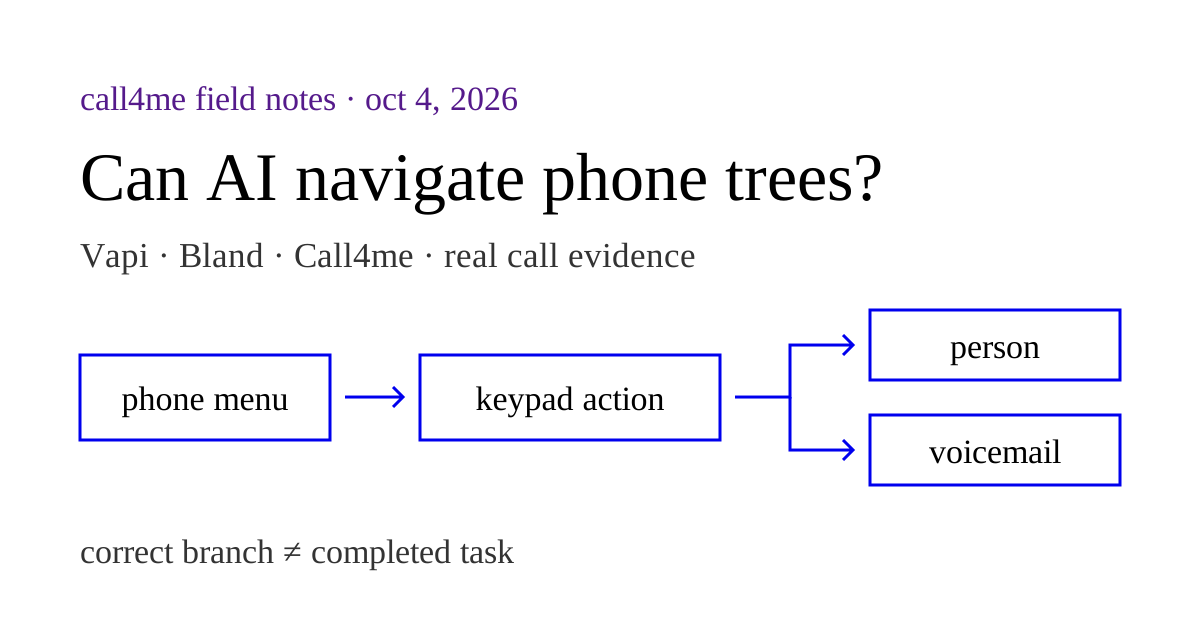
The same page includes an October 4 Agent Phone menu call. It reached the intended private dining voicemail but spoke afterward despite instructions to exit silently. Successful routing and successful instruction following need separate checks.
Try Call4me on a task you already have #
Connect Call4me using the Claude Code guide or Codex guide. Start with a connection check, then adapt this brief:
Use the office and appointment requirements we already selected. Check the official number and opening hours. Call about the times I approved, with a four minute talk time cap. Ask me before accepting another time. Keep following the call for questions and return the confirmed appointment details or what remains unresolved. Do not agree to a charge without my approval.
Call4me is built for that complete delegation: the brief, the live decision, your involvement when needed, and the result your assistant uses next.